Effective Drainage Solutions for Greenwich Village Residences
Sluggish sinks, standing water in showers, and recurring toilet backups create daily headaches for property owners and tenants in Greenwich Village. Between pre-war co-ops, residential brownstones, and bustling ground-floor restaurants near Washington Square Park, drainage networks manage substantial volumes of grease, soap scum, and organic waste. Over decades, interior rust scale on aging cast-iron soil stacks narrows pipe diameters, creating rough surfaces that easily trap debris.
Rather than relying on caustic chemical openers that damage older cast-iron infrastructure, professional drain cleaning Greenwich Village Manhattan provides mechanical clearing power. At NY Plumbing, we utilize motorized sectional snakes, precision cutting heads, and hydro jetting technology to restore full gravity drainage across kitchen branches, bathroom lines, and primary building sewers.
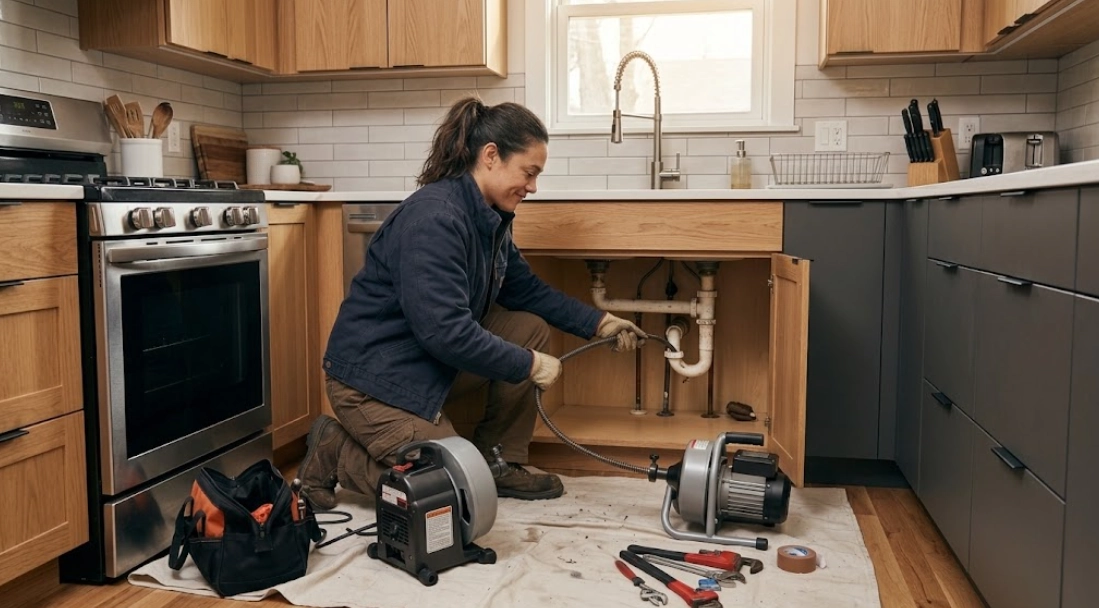
Mechanically snaking kitchen sink branch lines and clearing grease stoppages in a Greenwich Village residential apartment.
Signs Your Drains Require Professional Mechanical Cleaning
Drain issues rarely develop overnight; they worsen steadily as debris collects along the interior pipe circumference. Watch for these diagnostic warning signs:
- Slow Drainage Across Single or Multiple Fixtures: Water pooling around your ankles during showers or taking several minutes to empty from kitchen sinks.
- Gurgling Sounds From Adjacent Drains: Air bubbles forced through sink P-traps when a toilet flushes or a washing machine drains indicate negative pressure caused by a partially choked stack.
- Foul Sewer Odors in Living Spaces: Trapped food grease, rotting hair, and escaping sewer gases venting past dried-out or compromised fixture traps.
- Recurring Clogged Drain Repair Greenwich Village Manhattan Emergencies: Plunging provides only a few hours of relief before water stops draining again.
- Basement Floor Drain Backups: Wastewater bubbling up through cellar drains during heavy residential water usage indicates a blockage in the main building drain.
Frustrated by Stubborn Backups? Speak With a Plumber
Don't let overflowing drains ruin flooring or cabinets. Call NY Plumbing to dispatch professional mechanical drain clearing.
Call (315) 202-8009Common Drain Clog Causes in Historic Manhattan Buildings
Different fixtures accumulate distinct debris profiles requiring tailored clearing techniques:
- Kitchen Sink Drain Cleaning Greenwich Village Manhattan
- Cooking oils, butter, salad dressings, and dish soaps poured into kitchen sinks solidify as they contact cold underground pipes. Over time, grease coats the pipe circumference, catching coffee grounds and food scraps until water cannot pass. We use specialized grease-cutting blades that scrape pipe walls clean without scratching metal surfaces.
- Bathroom Hair & Soap Scum Accumulation
- Shower and bathtub drains catch long hair strands, body oils, and hardened bar soap binders around mechanical pop-up stoppers and strainer crossbars. Left untreated, these form dense, felt-like plugs that completely obstruct branch lines.
- Aging Cast-Iron Tuberculation & Scale
- Original cast-iron sewer stacks suffer from interior tuberculation—the gradual formation of rust mounds and mineral nodules on pipe interiors. These jagged surfaces catch toilet paper, flushable wipes (which do not break down in NYC sewer systems), and hygiene products, creating severe building stoppages.
Motorized Cable Snaking vs. High-Pressure Hydro Jetting
We match our clearing method to your pipe material, system age, and obstruction type:
- Motorized Cable Snaking: Commercial-grade sectional drain machines spin flexible tempered steel cables fitted with C-cutter blades, retrieving augers, or bulb heads. Snaking effectively bores through solid obstructions, breaks up compacted toilet paper, and retrieves foreign objects without placing excess pressure on older pipe joints.
- High-Pressure Hydro Jetting: For heavy grease accumulation, sludge, and recurring main line stoppages, hydro jetting utilizes specialized water jets delivering up to 4,000 PSI. Forward-facing jets pierce through obstructions while reverse-angled jets scour pipe walls 360 degrees clean, flushing all debris downstream to the city main.
Fiber-Optic Camera Verification for Persistent Stoppages
When a drain clogs repeatedly despite thorough snaking, the issue usually involves physical pipe defects rather than simple debris. In these situations, we insert a self-leveling fiber-optic inspection camera directly into the line.
The video inspection confirms whether recurring stoppages stem from cracked clay joints, invasive tree roots, back-pitched sags (bellies) where water pools, or broken cast iron. If camera inspection reveals deeper structural defects, we provide clear recommendations for targeted spot repairs or main sewer line repairs.
Related Services for Greenwich Village Buildings
Drainage systems connect directly to leak prevention and property protection:
Pipe Leak Repair
Repairing cracked drain traps, leaking cleanout plugs, and corroded waste arms.
Leak Detection
Non-invasive electronic acoustic and thermal imaging to locate concealed moisture before opening walls.
Backflow Testing
Annual certified backflow testing and device repairs to safeguard building potable water supplies.
Frequently Asked Questions About Drain Cleaning
Store-bought liquid chemical drain openers contain harsh sulfuric acid or sodium hydroxide that generate extreme heat when trapped against stubborn obstructions. In older Greenwich Village buildings with cast-iron or galvanized drain lines, these caustic chemicals eat through corroded pipe bottoms and degrade rubber slip-joint washers without removing the blockage.
Mechanical snaking is ideal for puncturing solid obstructions like paper or hair clogs. Hydro jetting uses high-pressure water (up to 4,000 PSI) to scrub heavy grease sludge and mineral scale completely off pipe walls. Hydro jetting is recommended for commercial restaurant lines and main building sewers after a camera inspection verifies pipe wall structural integrity.
If only one fixture drains slowly, the obstruction is located in that fixture's branch trap. If multiple fixtures—such as a kitchen sink, bathroom tub, and toilet—bubble, gurgle, or back up simultaneously, the stoppage is situated downstream in the building's shared vertical waste stack or horizontal house drain.
Yes. When wastewater backs up against an obstructed drain line, standing water fills horizontal pipes and puts hydraulic pressure on slip joints, tub overflow gaskets, and cleanout caps. If any joint is slightly loose, water seeps through, manifesting as a mysterious ceiling leak in the apartment below.