Precision Gas Piping Safety in Historic Greenwich Village Buildings
Natural gas fuels essential cooking, heating, and domestic hot water systems throughout Greenwich Village. From charming restaurant kitchens along Bleecker Street to multi-family brownstones and pre-war residential towers, gas distribution networks operate under strict safety standards. Because natural gas is volatile and pressurized, building codes in New York City enforce some of the most rigorous installation, testing, and inspection standards in the nation.
Whether you require a certified gas piping inspection Greenwich Village Manhattan evaluation, new appliance hookups, or comprehensive gas line repair Greenwich Village Manhattan following a utility shut-off, NY Plumbing delivers code-compliant, professional gas plumbing solutions engineered for absolute safety.
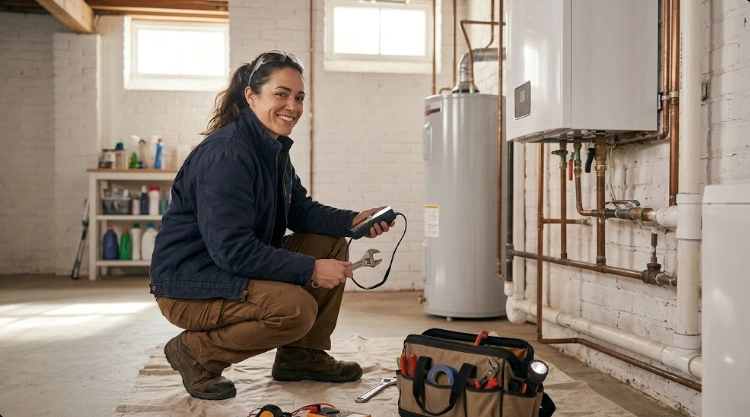
Conducting precision pressure-decay testing and electronic sniffer checks on residential gas manifolds in Greenwich Village.
Signs Your Gas Piping System Requires Professional Attention
Aside from active utility emergency situations, structural gas piping issues often develop gradually over decades. Call for a professional evaluation if you observe:
- Visible Surface Rust & Pitting on Black Iron Pipes: Cellar humidity, foundation dampness, or past water leaks cause severe oxidation on exposed gas lines, reducing pipe wall integrity.
- Faint or Intermittent Mercaptan Odors Near Meters: Slight sulfur smells around basement meter banks indicate minor threaded joint weeping or dried-out pipe dope.
- Yellow, Lazy, or Fluttering Appliance Flames: Burners on stoves, boilers, or water heaters displaying yellow flames indicate dirty burner orifices, improper air mixtures, or incorrect fuel delivery pressure.
- Con Edison or DOB Warning Tags: If the utility shuts off your service meter during a routine sweep, licensed pressure testing and repair filings are required before service restoration.
- Unsupported or Sagging Pipe Runs: Missing pipe hangers or physical impact damage can place mechanical stress on threaded joints, creating micro-leaks.
Con Edison Lock-Off or Local Law 152 Survey Needed?
We work directly with NYC Department of Buildings procedures to test, repair, and restore gas piping safely.
Call (315) 202-8009Comprehensive Diagnostic Testing & Pressure Verification
Locating micro-leaks in gas systems requires systematic electronic and mechanical testing protocols:
- Electronic Combustible Gas Sniffers
- Handheld catalytic sensors detect parts-per-million concentrations of natural gas, allowing technicians to trace subtle seepage along threaded fittings, unions, and appliance shutoff valves.
- High-Precision Pressure Integrity Tests
- To certify that a piping run is completely gas-tight, appliances are isolated and the line is pressurized with inert air or nitrogen. A calibrated test gauge monitors pressure over a designated duration (typically 15 to 30 minutes). Any drop in gauge pressure proves a leak exists and must be addressed before gas is reintroduced.
- Micro-Leak Bubble Testing
- Non-corrosive detection solution applied directly to threaded joints and valve packing produces visible foaming bubbles at the exact micro-fracture location, guiding targeted joint repair.
NYC Local Law 152 Gas Piping Inspections
Under NYC Local Law 152 of 2016, all buildings classified as occupancy group R-2 (properties containing more than two residential units, including co-ops, condos, and apartment buildings) must undergo periodic gas piping system inspections once every four years.
Inspections must be conducted by or under the direct supervision of a Licensed Master Plumber. The survey covers exposed piping from point of entry, meter banks, boiler rooms, and public hallways, identifying corrosion, illegal connections, missing shutoff valves, and active gas leaks. We assist Greenwich Village property owners, boards, and managing agents with compliant LL152 inspections, defect remediation, and official GPS-1 filings submitted to the NYC Department of Buildings.
Gas Appliance Connections & Custom Stove Installations
Upgrading high-end residential kitchen appliances requires compliant plumbing installation:
- Gas Line Installation for Stove Greenwich Village Manhattan: Professional installation of dedicated black iron drops, approved commercial-grade flexible connectors, and quarter-turn shutoff ball valves complying with NYC mechanical clearance regulations.
- Heating Boilers & Water Heaters: Ensuring correct BTU pipe sizing to prevent fuel starvation, burner whistling, and incomplete combustion.
- Gas Clothes Dryers: Installing accessible shutoff valves, code-compliant sediment traps (drip legs), and flare-joint connections.
Related Services for Greenwich Village Properties
Gas fuel delivery operates directly alongside building heating and water heating equipment:
Water Heater Repair
Gas burner tuning, thermocouple testing, draft hood verification, and tank servicing.
Boiler Repair
Gas boiler ignition diagnostics, safety control testing, and steam system maintenance.
Pipe Leak Repair
Emergency repairs for corroded domestic water lines, pinholes, and burst pipe joints.
Frequently Asked Questions About Gas Line Repair & Inspection
Evacuate the building immediately. Do not operate light switches, unplug appliances, ring doorbells, or use any mobile phones inside, as an electrical spark can ignite gas vapors. Once outside at a safe distance, call 911 or the Con Edison Emergency line at 1-800-75-CONED immediately.
Local Law 152 mandates that all buildings across New York City classified as occupancy group R-2 (properties containing more than two residential units, such as co-ops, condos, and apartment buildings) undergo periodic inspections of their exposed gas piping system once every four years by or under the direct supervision of a Licensed Master Plumber.
Technicians isolate the piping system, seal appliance drops, pump inert air or nitrogen into the pipework, and attach calibrated digital manometers or mercury gauges. The system must hold required pressure without any drop over an extended test window to certify zero leakage before utility gas restoration.
No. New York City construction codes strictly mandate that all gas piping modifications, appliance hookups, and shut-off valve replacements be performed by licensed plumbing professionals under appropriate NYC DOB permits and safety standards.